Steel and blade construction
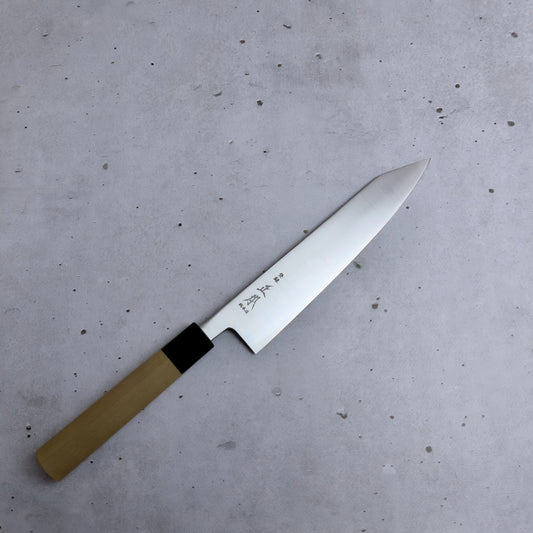
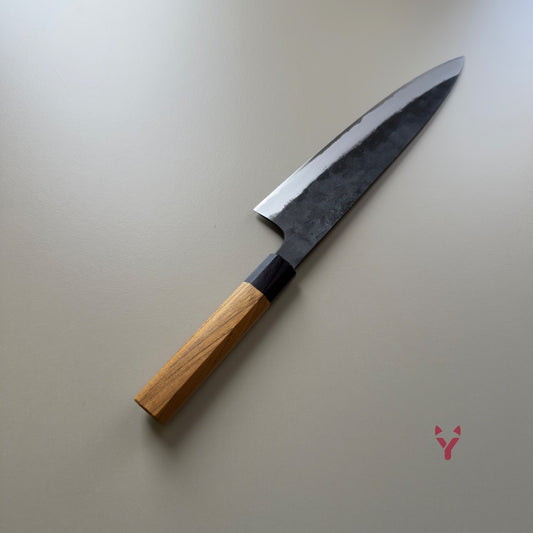
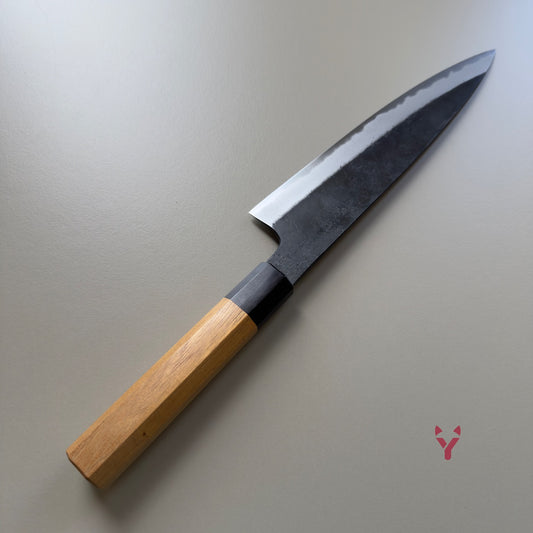
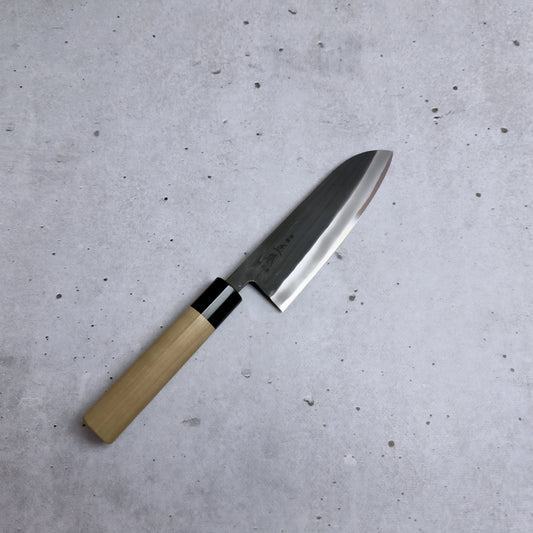
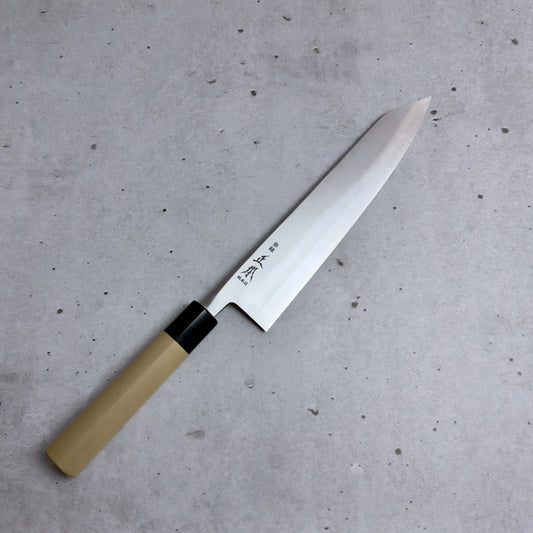
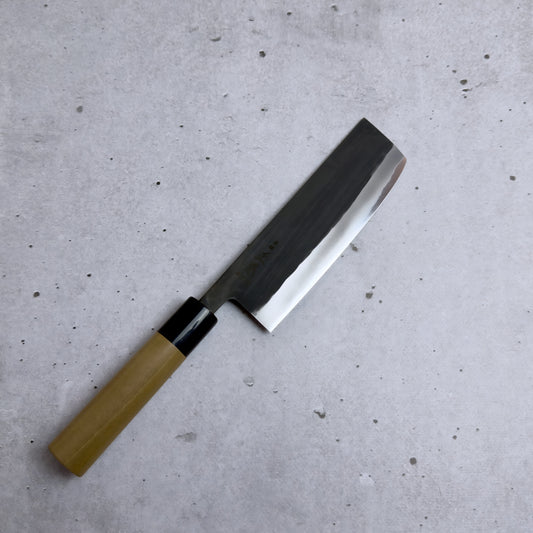
Japanese kitchen knives are traditionally made of high-carbon steel (Shirogami - white steel or Aogami - blue steel), which allows for a thin and extremely sharp cutting edge.
Higher hardness means:
- longer edge retention
- cleaner cut
- less resistance when cutting
Many models feature a layered construction (kasumi, san-mai), where a hard core is responsible for sharpness, and softer cladding stabilizes the blade.
Ergonomics and balance
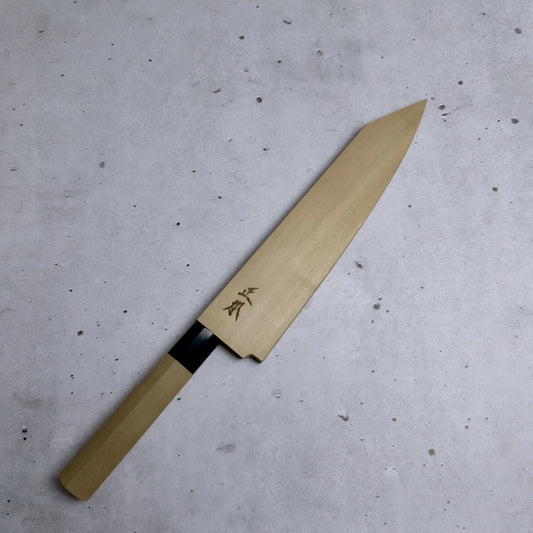
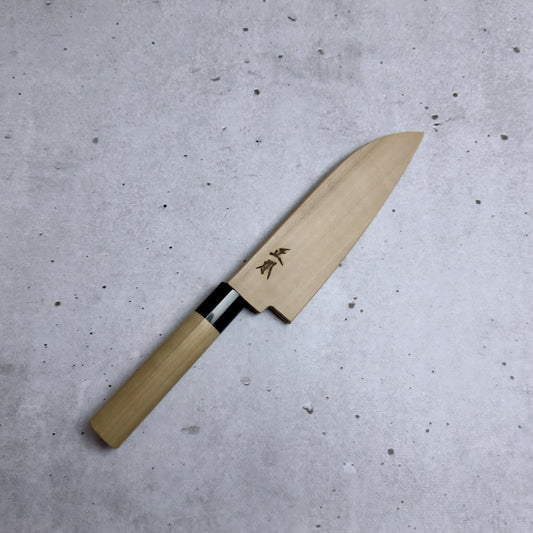
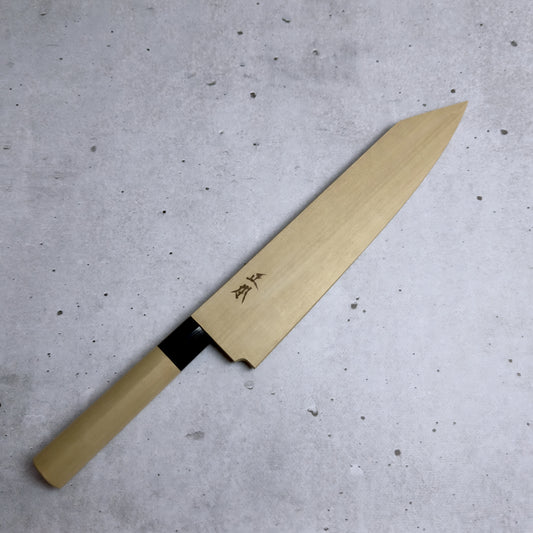
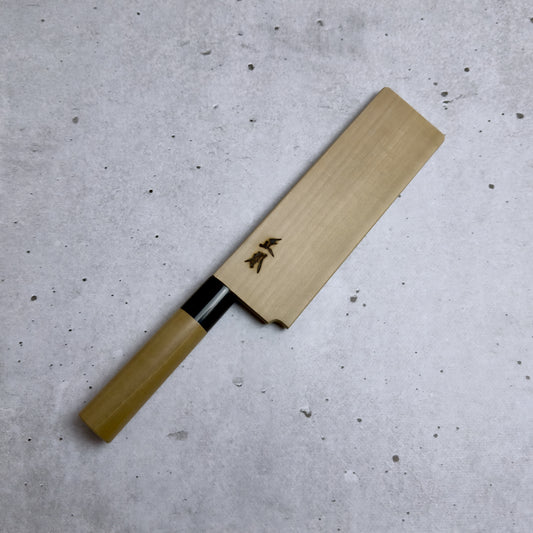
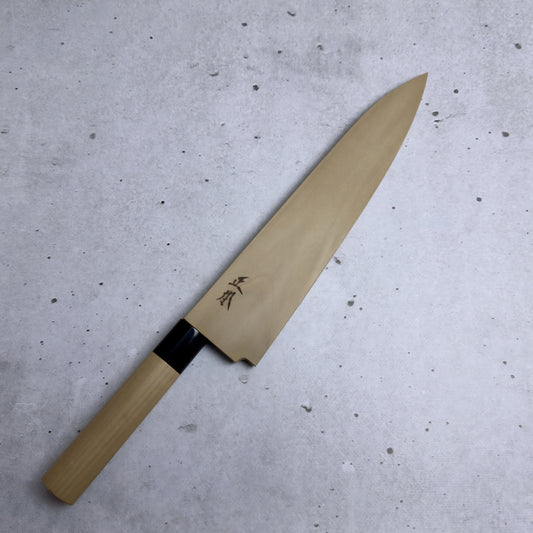
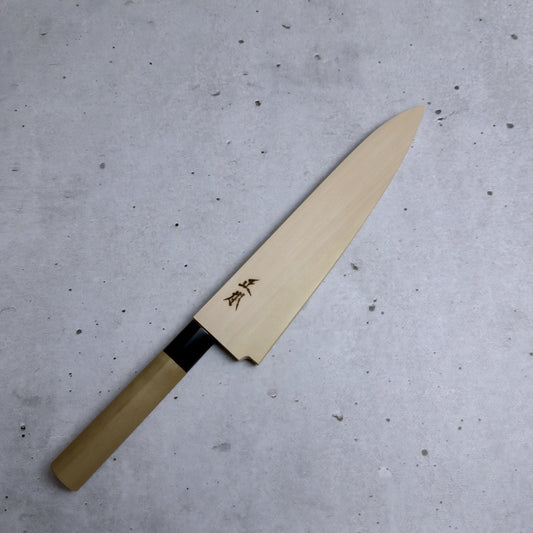
Japanese knives are available with either a wa handle (traditional, wooden, lightweight) or a yo handle (Western, full tang).
A lighter blade front and a shifted balance point allow for greater control during precise work.
These tools are designed for "push cut" and "slice" techniques, not for forceful chopping.